Behind the Applause: The Reality CMOs Are Facing in Marketing Teams
18 Dec 2025
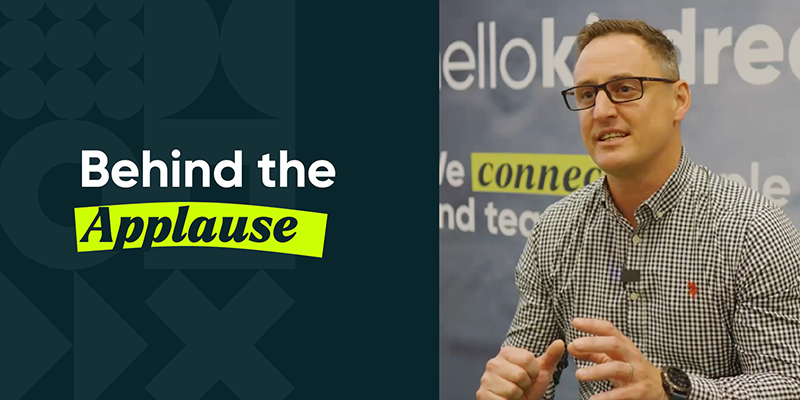
By Roland Glass, Chief Commercial Officer, HelloKindred
Two very different experiences I had recently brought our industry into sharp focus for me. I attended the B2B Awards in London — an evening that reminded me why I love our industry. It was a celebration of creativity, camaraderie and the relentless pursuit of excellence. For a business like HelloKindred, often working quietly behind the scenes to help others realise their creative visions, it was a privilege to cheer on our five clients nominated for best-in-class awards. Moments like these show the very best of what marketing can be when purpose, talent and passion align.
But days earlier, at the CMO Roundtable hosted by HelloKindred, the tone was very different. There too, I was surrounded by formidable intelligence, passion and experience — but today’s CMOs have to wear more hats than their predecessors. We’re expected to deliver more with less, drive growth in volatile markets, generate customer trust, demonstrate commercial impact and integrate AI — all working with shrinking budgets, rising expectations and turbulent market conditions for our organisations.
And in forum, many admit what is becoming undeniable: our role is changing faster than organisations are adapting. CMOs are being asked to transform our teams and operating models while simultaneously proving our own value. It’s no wonder so many feel set up for failure.
Working alongside CMOs around the world, I see the emotional and operational toll this takes. These are leaders who desperately want to drive value and inspire their teams to deliver their best work, but they’re trapped between ambition, fluid corporate priorities and the structural limitations of outdated ways of working. Their resilience is extraordinary — but resilience alone is not enough.
A CMO’s Perspective On Leading Growth
The reality is this: marketing is no longer just the engine of creativity, brand and storytelling. Today, CMOs must be catalysts for business performance — drivers of agility, growth and customer advocacy. We must deliver results while also telling the story of how marketing contributes to the long-term sustainability of organisations and brands.
This is the tension I hear repeatedly:
“How do I show commercial impact when so much of marketing’s value is long-term, relational and intangible?”
Marketing is the heartbeat of the organisation – without it, the whole business loses relevance and grinds to a halt. If marketing can’t wield influence over both the performance and the profitability of the organisation, the whole business feels the consequences. To survive this upheaval, we need to redefine the role of CMO — and the operating models surrounding it must shift at the same pace. Rigid, resource-heavy structures make marketing teams slow to adapt and force organisations into inefficient cycles of hiring and downsizing as conditions shift. To remain effective, marketing teams need to move toward more fluid, network-based operating models. By integrating internal and external talent, as well as nearshore and offshore resources into one cohesive problem-solving engine you can reach your goal in new and agile ways.
We Must Lead Through Change
If the CMO is now positioned as a strategic driver, then change leadership becomes indispensable. Every executive function, across every industry, is navigating a transformation cycle — and marketing is no exception.
Awards and customer wins aside, everyone in our discipline is grappling with the same challenge:
How do we lead through uncertainty while demonstrating efficiency, adaptability and commercial impact?
Organisations must invest in brand, trust and advocacy — not just operations and customer support — if they want to create durable, resilient growth. But CMOs can only make this case with confidence if we are equipped with the tools, models and data to show how customer connection creates value. Skip that step, and the entire function becomes vulnerable, suffers from short-termism and follows a trajectory of execution thinking rather than commercial and strategic value creation.
Moving From Blunt To Sharp Instruments
Traditional, fixed marketing departments — built for full-time, in-office roles — simply cannot keep pace with today’s volatility. They are heavy, slow to pivot and prone to the wasteful rinse-and-repeat cycles of hiring, upsizing and downsizing.
This is where many CMOs feel the greatest frustration. They know what needs to change, but they don’t always have an operating model that supports adaptability or the ability to access talent on demand.
The solution lies in shifting from rigid organograms to flexible resource networks — dynamic, interconnected systems of talent that blend internal expertise with nearshore, offshore and augmented support. This networked approach gives CMOs the ability to scale with precision rather than force, and to deploy exactly the right capability at exactly the right moment.
This shift is not just operational — it is philosophical. It’s the move from blunt instruments to sharp ones.
Planning With Agility, Demonstrating Value
Planning annually in a world that changes quarterly no longer works. A strategy set in January may already be obsolete by March. CMOs are navigating political unpredictability, economic pressure and AI-driven disruption at a speed that demands shorter cycles, test-and-learn approaches and real-time adaptability.
Quarterly planning gives teams space to pivot with customer sentiment, technology shifts and real-world behaviour. It replaces outdated assumptions with responsive intelligence — and helps marketing leaders demonstrate value continuously, not retrospectively.
Today’s Talent Is Choosing Purpose Over Tenure
As teams become more fluid, so too must roles. Increasingly, talented marketers and creatives want portfolio careers — opportunities to contribute meaningfully across brands, markets and industries. They want flexibility, continuous retooling, exposure and purposeful work.
At HelloKindred, we see this every day. The best talent is no longer searching for tenure; they are searching for impact. When organisations embrace this shift, they gain access to a broader, richer and more diverse network of skills — and talent engagement becomes a competitive advantage rather than a constraint.
Where to From Here?
Despite the mounting pressures, CMOs have a once-in-a-generation opportunity to redefine our influence. By building adaptable teams, leveraging networked resourcing and investing in trust and advocacy, we can create marketing functions that drive both performance and resilience.
In uncertain times, CMOs don’t diminish in relevance — we rise to become the connective tissue between customer understanding, commercial performance and organisational sustainability.
Uncertainty is now a permanent condition, not an occasional disruption. So we must build for change, not for stasis. The future of marketing leadership will be built by those who understand that networks — of people, partners, skills and ideas — are now our greatest source of strength. And if we design our systems with agility and humanity at the centre, we will not only go far; we can go further than we ever imagined.
Looking back on a week in London, it was a mix of real highs and some hard truths. Inspiring conversations, ambitious thinking, and a shared sense that marketing is at a turning point — alongside the honest acknowledgement that many team structures simply aren’t keeping up. These reflections have only reinforced my belief that we need to rethink how we design marketing teams, together with CMOs who are navigating this reality every day. If we get it right, we can build ways of working that are more flexible, more human, and far better suited to the pace and unpredictability of the world we’re operating in.
👉 Joel Harrison’s article discusses the CMO Forum and insights garnered,” Tough lessons in marketing transformation.”
👉 If you’re thinking about how to design a marketing team that’s built for change, this article explores what a future-ready operating model really looks like — and where most teams get stuck.